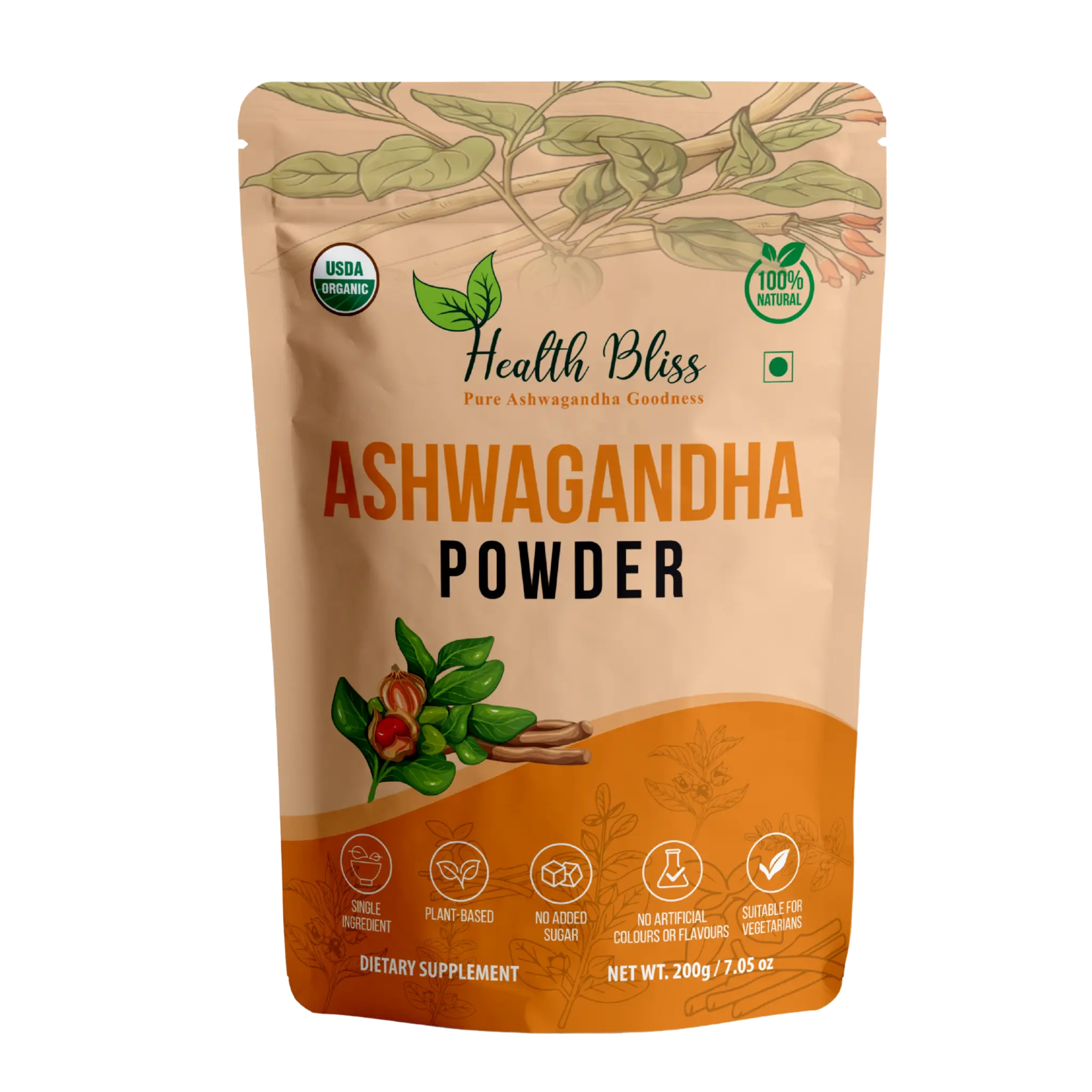
Rooted in traditional use
In Ayurveda, plants are considered in the context of the whole person, daily habits and season—not as isolated quick fixes. Ashwagandha has traditionally been valued as a strengthening and grounding botanical.
Traditional history is useful context, but it is not a promise that a product will diagnose, treat or cure a condition.
What the name and tradition tell us
The Sanskrit name is often translated in relation to the strength or scent of a horse. Classical Ayurveda places ashwagandha among rasayana botanicals—a broad traditional category associated with nourishment, restoration and maintaining resilience over time.
In India, the dried root has traditionally been ground into churna, or powder, and combined with a suitable anupana—a carrier food or drink such as warm milk or ghee—chosen according to the person and context. It has also appeared in traditional preparations such as herbal ghees and compound formulas. These practices belong to a complete medical tradition and should not be reduced to a universal recipe for everyone.
Why people use it today
Modern customers often seek ashwagandha for calm, sleep quality, resilience during periods of stress, physical performance, concentration or general vitality. Some clinical research has examined these areas, especially stress and sleep, but results depend on the specific extract, dose, study group and duration.
A root powder, a powder-filled capsule and a standardised extract are not interchangeable. Research on one branded or concentrated extract cannot automatically prove the same result for every ashwagandha product.
- A grounding addition to an evening routine.
- Traditional nourishment and general vitality.
- Support for adapting to demanding periods—often described using the modern term adaptogen.
- Convenient powder or capsule formats for different lifestyles.
Beyond India
Withania somnifera also grows across parts of Pakistan, Sri Lanka, the Middle East, the Mediterranean and North Africa. Related local traditions have used the plant in different ways, while the global wellness industry now sells it widely in Europe, North America and Australia.
International popularity can make traditional plants sound like instant solutions. A more respectful approach is to acknowledge their cultural history, identify the exact format and keep claims proportionate to the evidence.
How the powder tastes
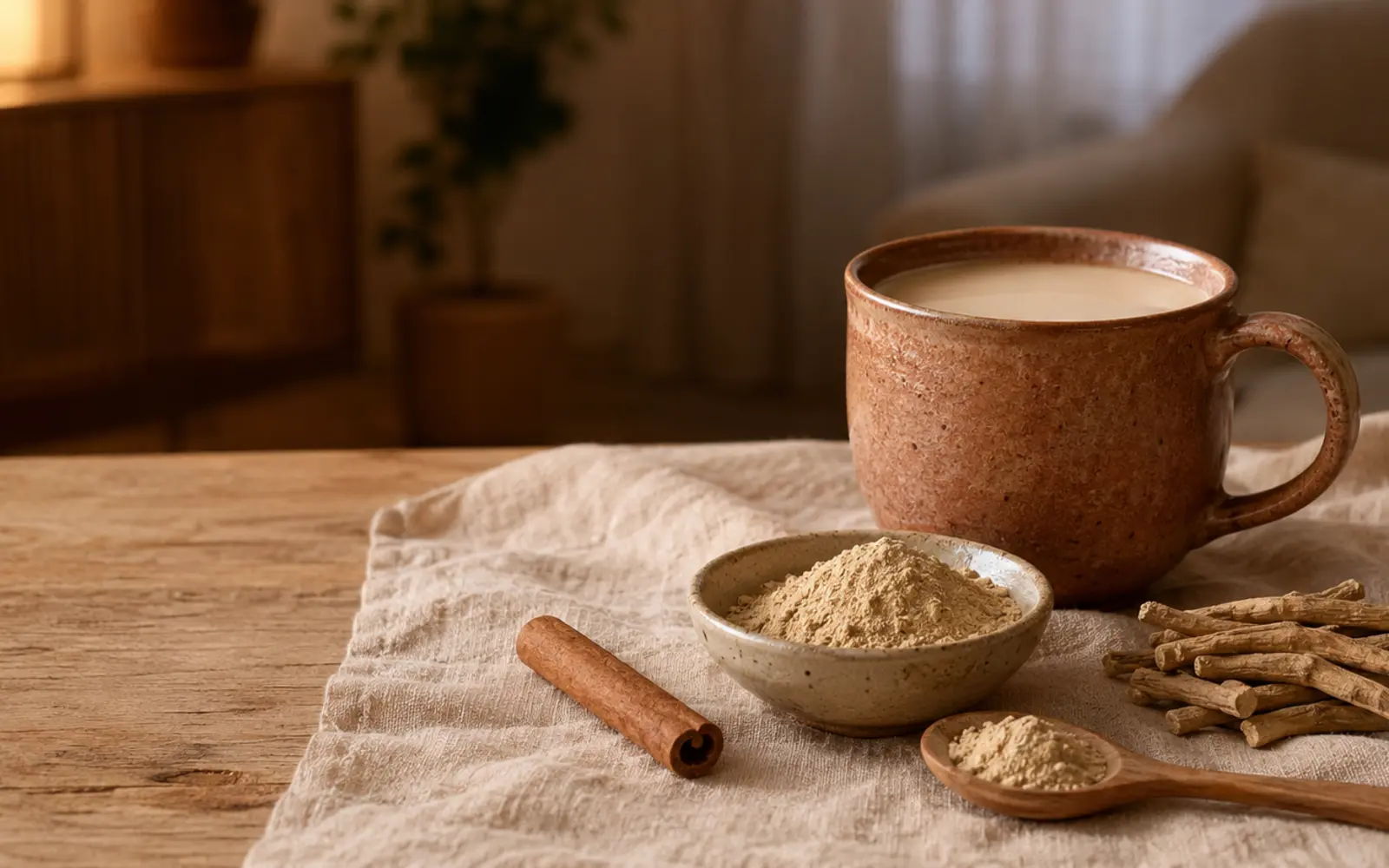
Ashwagandha root powder has an earthy, slightly bitter character. Warm, softly spiced combinations tend to complement it best.
- Mix with warm milk or a plant-based alternative and cinnamon.
- Pair with cacao and banana in a smoothie.
- Add to a date, oat and nut-butter blend.
- Use only the serving shown on the product label.
Root powder, capsule or extract?
A root-powder capsule contains milled root in a convenient shell. Loose powder offers recipe flexibility. A standardised extract is a different, more concentrated preparation and should not be treated as interchangeable.
Read the ingredient panel closely so you understand which format and amount you are choosing.
When professional advice matters
Ashwagandha may not suit everyone. Avoid it during pregnancy unless specifically advised by a qualified health professional, and seek advice if breastfeeding, using medicines or managing a health condition.
This blog is for general education only. It does not diagnose, treat, cure or prevent disease. Individual needs differ; seek qualified advice for medical concerns, medicines, pregnancy or breastfeeding.