From Indian kitchens to tropical food cultures
In India, moringa is known by regional names including sahjan, saragva and murungai. The tender pods are cooked in sambar, dals and vegetable curries, while fresh leaves may be sautéed, added to lentil dishes or folded into breads. Traditional Ayurvedic practice also describes different parts of the tree, although ordinary culinary use should be distinguished from therapeutic treatment.
Moringa travelled and naturalised across Sri Lanka, Southeast Asia, the Philippines, East and West Africa, the Caribbean and parts of Latin America. In the Philippines, malunggay leaves are commonly added to soups. Across parts of Africa, fresh or dried leaves enrich sauces, stews and porridges. These varied traditions share one practical idea: moringa is first and foremost a useful food plant.
Why moringa has become a pantry favourite
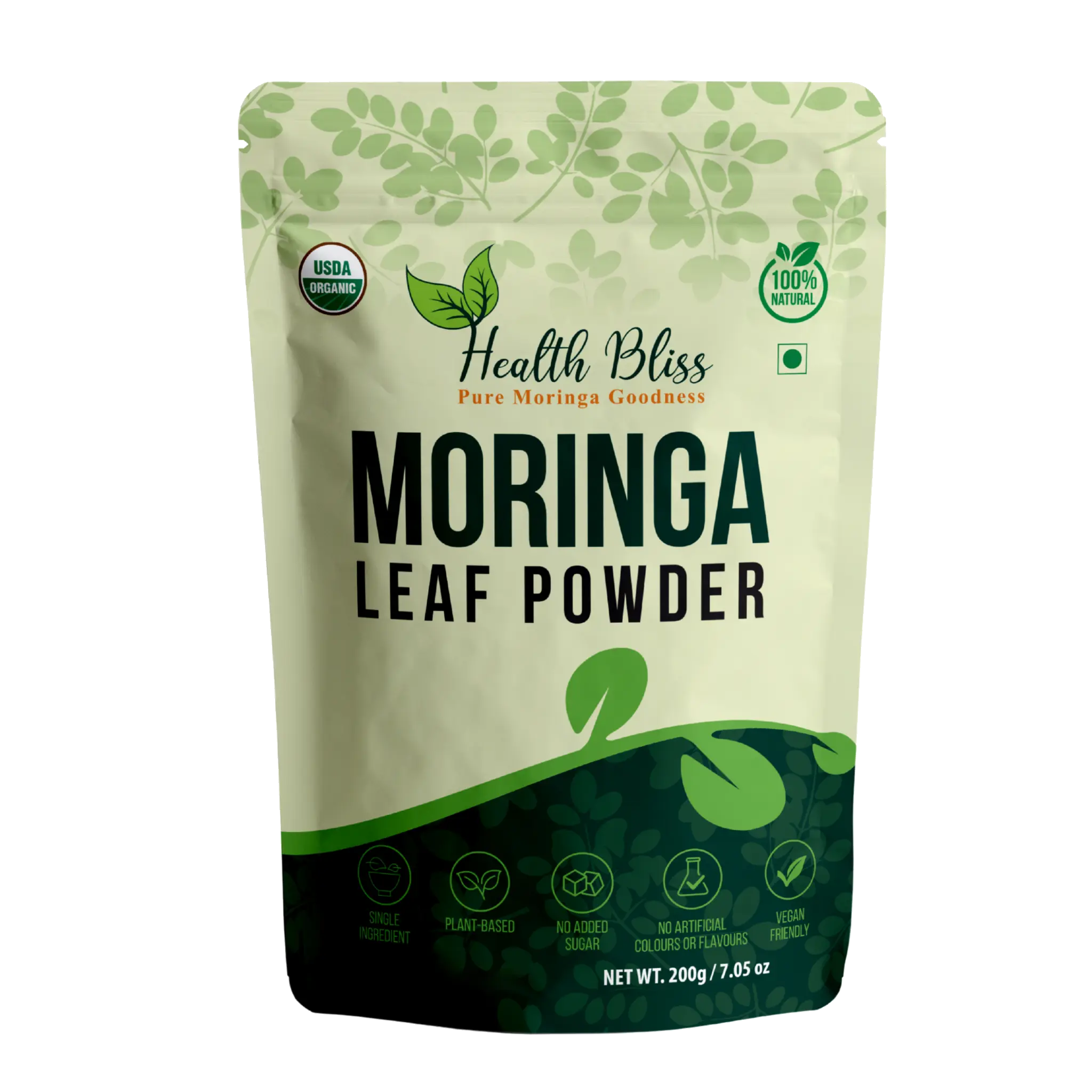
Moringa powder is popular because it is uncomplicated: a single plant ingredient that can be measured, mixed and adapted to foods you already enjoy.
Its naturally leafy flavour is more noticeable than neutral powders, so begin gently and pair it with ingredients that balance its character.
Benefits people traditionally associate with moringa
People commonly use moringa as a nutrient-dense green food and as a way to add plant variety to the diet. The leaves naturally provide fibre and contain plant compounds, vitamins and minerals, but the exact amount varies with growing conditions, processing and serving size.
Traditional communities have used moringa foods during demanding seasons and as part of family nourishment. Today, customers often choose it to support a balanced diet, everyday vitality and antioxidant intake. These are general nutritional intentions—not a guarantee that moringa will prevent illness, correct a deficiency or replace vegetables, medical care or a varied diet.
- A convenient source of leafy plant material.
- A way to broaden the variety of greens in meals.
- Naturally occurring phytonutrients and antioxidant compounds.
- A flexible ingredient for smoothies and savoury recipes.
What modern research is exploring
Researchers have studied moringa leaf for its nutrient profile and naturally occurring compounds, including polyphenols. Early studies also explore areas such as glucose and lipid metabolism, but study sizes, preparations and doses vary. That research is not strong enough to treat an ordinary food powder as a medicine or promise a specific health outcome.
The most responsible way to describe moringa is as a traditional leafy food with an interesting nutritional profile, enjoyed as part of a balanced lifestyle.
Easy food combinations
Think of moringa as a green culinary ingredient rather than something that must be taken on its own.
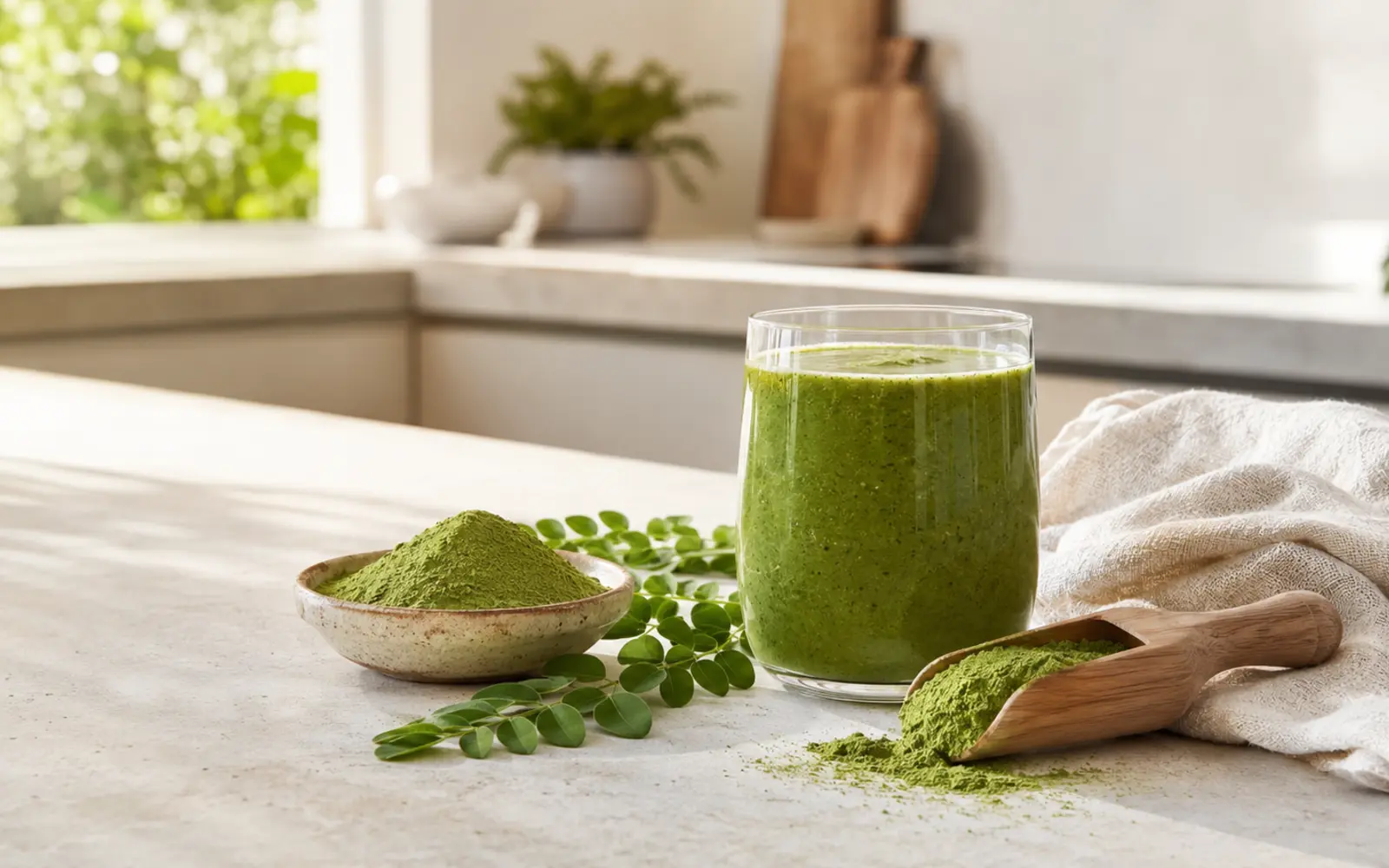
- Blend with banana, mango or pineapple for natural sweetness.
- Stir into yoghurt with berries and a little honey.
- Pair with lemon, ginger and apple in a fresh green drink.
- Add to savoury soups or dips where herbs and spices already lead the flavour.
Powder or capsules?
Powder gives you flexibility and makes the ingredient part of a meal. Capsules suit busy days, travel and people who prefer to avoid the earthy taste. The useful choice is the one that fits your routine and its labelled directions.
A grounded way to begin
Start with the labelled serving, mix thoroughly and notice which combinations you genuinely enjoy. A consistent, balanced food routine matters more than turning any single ingredient into a miracle.
This blog is for general education only. It does not diagnose, treat, cure or prevent disease. Individual needs differ; seek qualified advice for medical concerns, medicines, pregnancy or breastfeeding.