
Ayurveda begins with the individual
Ayurvedic tradition describes three functional patterns—vata, pitta and kapha—and recognises that people, foods, seasons and life stages express different qualities. This is why traditional advice is personalised rather than built around one perfect diet.
You do not need to identify yourself rigidly as a dosha to use the most practical ideas. Regular meals, appropriate portions, seasonal ingredients, attentive eating and noticing your own comfort are sensible starting points.
Agni and the importance of digestion
Agni, often translated as digestive fire, is a central Ayurvedic idea. It represents the body's capacity to digest and transform food. Traditional practitioners pay attention not only to what is eaten, but also to appetite, meal timing, preparation and the feeling after a meal.
From a modern everyday perspective, this encourages useful habits: eat when comfortably hungry, avoid continually grazing if it disrupts appetite, chew well, and choose simpler cooked meals when digestion feels unsettled. Persistent symptoms still require assessment by a qualified healthcare professional.
Begin with simplicity
An Ayurvedic-inspired plate does not need rare ingredients. Warm, freshly prepared food, sensible portions and regular mealtimes are a practical foundation.
Instead of rigid rules, observe how you feel after meals. Comfort, steady energy and ease are more useful guides than an intimidating list of restrictions.
The six tastes on the plate
Ayurveda describes six tastes: sweet, sour, salty, pungent, bitter and astringent. A varied meal may include several tastes, helping food feel satisfying without depending on excessive amounts of one flavour.
Sweet in this context includes nourishing foods such as grains and root vegetables—not only sugar. Leafy greens contribute bitter notes, legumes can be astringent, lemon is sour, spices bring pungency and a suitable amount of salt rounds out flavour.
- Sweet: rice, oats, pumpkin and sweet potato.
- Sour: lemon, lime or cultured foods that suit you.
- Salty: mineral or sea salt used moderately.
- Pungent: ginger, mustard seed, black pepper and chilli.
- Bitter: leafy greens, fenugreek and turmeric.
- Astringent: lentils, beans, pomegranate and many teas.
Build a balanced plate
A simple meal can combine a cooked grain, an easy-to-digest protein, seasonal vegetables, a little healthy fat and aromatic spices.
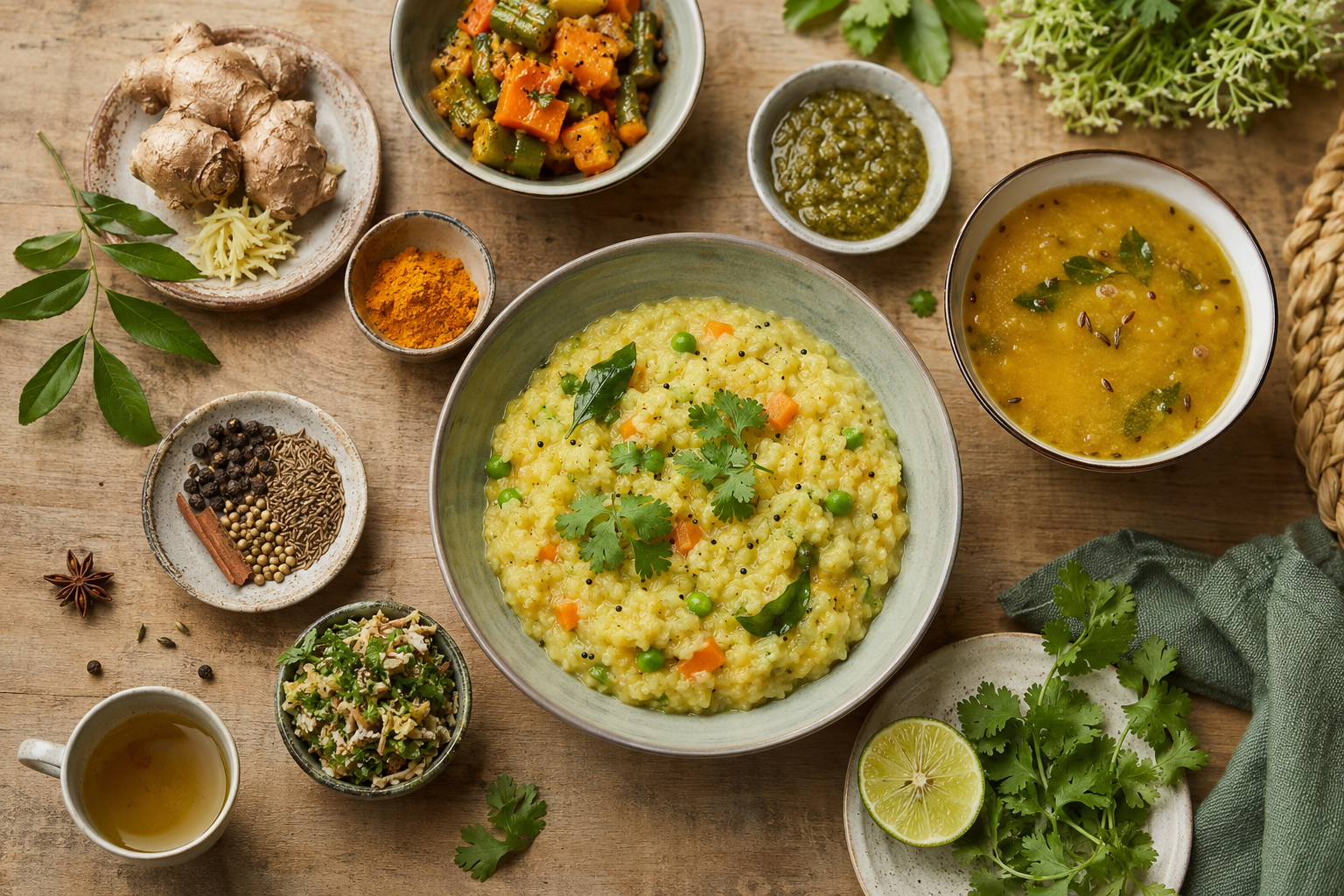
- Rice, mung dal, vegetables, cumin and ghee or olive oil.
- Oats cooked with cinnamon, stewed apple and nuts or seeds.
- Vegetable soup with lentils, ginger and fresh herbs.
- Quinoa, roasted vegetables and a lightly spiced dressing.
Traditional Indian meal wisdom
Everyday Indian food traditions often put Ayurvedic principles into practice without naming them: dal with rice, seasonal sabzi, small amounts of pickle or chutney, warming spices and meals shared at regular times. Khichdi—rice and split mung cooked softly with spices—is widely valued as a simple, comforting meal.
Regional traditions differ enormously. Coconut and curry leaves shape many southern meals; mustard oil and warming spices appear in northern and eastern cuisines; millet is important in drier regions. Ayurveda is not one fixed menu, and local climate, culture and availability have always influenced the plate.
Combinations to approach thoughtfully
Traditional Ayurveda describes viruddha ahara—foods considered incompatible because their combined qualities may be difficult for some people. Modern evidence for many rules is limited, so use them as prompts for observation rather than universal medical facts.
- Very heavy meals containing many rich foods at once.
- Large quantities of raw and cooked food together when digestion feels sensitive.
- Fruit added to a dense meal if it leaves you uncomfortable; many people prefer fruit separately.
- Ice-cold drinks with warm meals if they reduce digestive comfort.
A note on well-known traditional cautions
Some Ayurvedic traditions advise against particular combinations, commonly including heating honey, combining equal quantities of honey and ghee by weight, or taking milk with certain sour, salty, fermented or fish-based foods. These teachings arise from the traditional framework and are not all established by modern clinical evidence.
Avoid turning these ideas into fear or an unnecessarily restrictive diet. Food safety, allergies, intolerances, medical nutrition needs and overall dietary quality remain important. When a combination repeatedly causes discomfort, record it and discuss it with an appropriate professional.
Spices as culinary companions
Ginger, cumin, coriander, fennel, turmeric and black pepper add aroma and variety. Adjust heat and quantity to your taste and tolerance.
Ayurveda is personalised. A combination that feels comfortable for one person may not suit another, and persistent symptoms deserve professional medical advice.
Your five-minute practice
Choose one freshly prepared meal, sit down without rushing, chew well and notice how you feel over the next few hours. Calm attention is one of the most accessible Ayurvedic habits of all.
This blog is for general education only. It does not diagnose, treat, cure or prevent disease. Individual needs differ; seek qualified advice for medical concerns, medicines, pregnancy or breastfeeding.